 Madagascar Voyage Diaries
Madagascar Voyage Diaries
Modern U.S. dollar coins rarely get respect. Many people still treat them as awkward pocket fillers or vending-machine leftovers. That casual attitude is exactly why some of the most valuable modern errors slip through circulation unnoticed.
Since 2000, the U.S. Mint has produced several dollar coin programs—Sacagawea, Presidential, and Native American—using new alloys, edge lettering, and fast production cycles. These changes created ideal conditions for dollar coins worth money. A small number of those mistakes now trade for thousands or even six figures.
Unlike classic silver dollars, modern dollars were struck in huge volumes and circulated lightly. That combination leads to two important realities:
Most examples stay in high grade
Errors stand out sharply once identified
Collectors who focus only on pre-1965 coins often ignore modern dollars. Specialists do not.
Not every modern dollar deserves attention. A focused approach starts with understanding which series produced real opportunities.
Sacagawea Dollars (2000–present)
Golden color, smooth rims, and early experimental planchets made this series a magnet for mules and wrong-planchet strikes.
Presidential Dollars (2007–2016)
Edge lettering was applied separately, creating famous missing-lettering errors that escaped quality control.
Native American Dollars (2009–present)
Lower mintages and frequent design changes increase collectible appeal, especially in top grades and error forms.
Each program introduced new production variables. Every variable increases the chance of something going wrong, and the best coin identifier app can help you discover those varieties with ease.
Modern dollar coins are not valuable because they are rare by mintage. They are valuable because the errors are dramatic and unmistakable.
High-impact categories include:
Mules (two different coin designs struck together)
Missing or partial edge lettering
Wrong planchet strikes
Major doubled dies
These are not subtle flaws. When real, they are obvious even to non-collectors.
The benchmark example is the 2000-P Sacagawea / Washington quarter mule. It combines a quarter obverse with a dollar reverse—an impossible pairing under normal conditions. Fewer than two dozen are known. One sold for $192,000at auction.
That single error reshaped how collectors view modern dollars. It proved that pocket-change coins deserve patient coin identification and might rival classic rarities.
Many modern dollar errors were found years after release. They passed through banks, cash drawers, and collections because few people inspected them closely.
Common reasons they are missed:
Edge lettering ignored
Weight never checked
Assumption that “new coins can’t be rare”
That mindset creates opportunity.
Once you know where to look, the field narrows quickly. Only a handful of modern dollar issues produce repeatable, verifiable value. These are the coins collectors check first when rolls or collections surface.
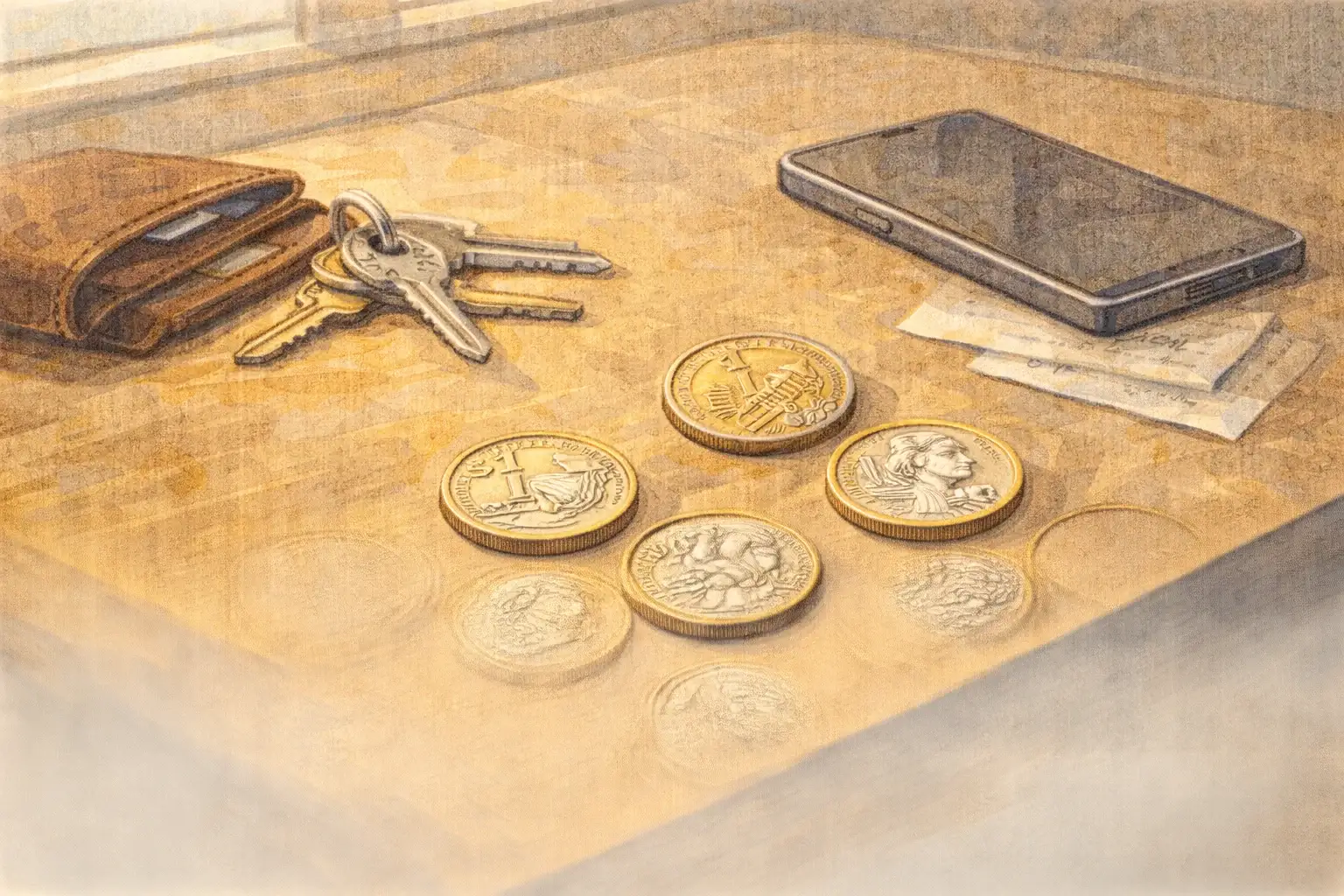
The Sacagawea series produced the most dramatic modern dollar errors. Early experimentation and multiple planchets created perfect conditions for mismatches.
Key targets include:
2000-P Sacagawea / Washington Quarter mule
A quarter obverse paired with a dollar reverse. Fewer than 20 known. This is the modern-dollar benchmark.
2000-P Sacagawea on quarter planchet
Smaller diameter and reduced weight make this error immediately obvious.
2004-P Peace Medal varieties
Strong demand in top grades and among series specialists.
Collectors check:
Diameter and thickness
Weight close to 8.1 g for normal strikes
Design alignment on both sides
Any mismatch deserves isolation.
Presidential dollars introduced edge lettering as a separate minting step. That process failed often enough to create a recognized error class.
Most watched examples:
2007 Washington dollars missing edge lettering
Plain edges with no date, motto, or mint mark.
Partial edge lettering
Incomplete inscriptions from misaligned collars.
These errors are popular because:
They are easy to confirm
They exist in multiple grades
Certification populations are well documented
High-grade examples consistently bring strong premiums.
Occasionally, the Mint produced impossible combinations.
The most famous:
2014 Sacagawea / Presidential dollar mule
Mixed obverse designs struck together. Fewer than a dozen known. Auction prices exceeded $80,000.
These coins are visually striking and easy to authenticate once weighed and measured.
While most Native American dollars trade near face value, certain conditions elevate them.
Watch for:
Low-mintage years (often 1–2 million)
Top-grade examples (MS69 and above)
Clear doubled dies or off-metal strikes
These coins appeal to collectors building complete annual sets and error specialists alike.
Coin | Error Type | Why It Matters |
2000-P Sacagawea | Quarter mule | Iconic modern error |
2007 Presidential | Missing edge lettering | Easy verification |
2014 Dollar mule | Obverse pairing | Ultra-low survival |
2000-P Sacagawea | Wrong planchet | Size/weight mismatch |
Native American $ | Doubled die | Low mintage appeal |
Most modern dollar finds come from:
Bank rolls
Coin-counting machines
Old collections ignored for years
Fast screening matters. Many collectors use tools like Coin ID Scanner to photograph suspect coins and instantly confirm weight, composition, and design specs against known issues. It helps separate routine dollars from true anomalies before deeper research.
Modern dollar value concentrates in clear, mechanical mistakes, not subtle varieties. Mules, missing edges, and wrong planchets dominate the high end.
Knowing which modern dollar coins matter is only half the work. The final step is execution—how you search, verify, store, and decide what to do next when something unusual shows up.
Most high-profile modern dollar errors were not discovered at the Mint. They surfaced later.
The most productive sources remain:
Bank-wrapped rolls of dollar coins
Coin-counting machines that reject odd sizes
Old household collections set aside years ago
These coins often appear in excellent condition because modern dollars circulated lightly.
When a dollar coin looks odd, follow a fixed order.
Check the edge
Is lettering missing or incomplete?
Does the edge match the series?
Compare both sides
Do the designs belong together?
Any mismatched pairing is a red flag worth isolating.
Weigh the coin
Normal modern dollars are close to 8.1 grams.
Significant deviation signals a wrong planchet or alteration.
Inspect strike quality
Genuine errors show crisp, mint-made detail.
Filing, grinding, or damage usually looks rough and uneven.
If the coin fails one test, stop. If it passes all, move to verification.
Not every unusual coin is valuable.
Common dead ends:
Post-mint damage mistaken for errors
Sanded edges trying to mimic missing lettering
Altered coins plated or ground down
True mint errors show precision, not improvisation. If a flaw looks crude, it likely is.
Before selling or submitting a coin:
Photograph both sides and the edge
Record weight and diameter
Note where and how it was found
Digital tools help at this stage. Coin ID Scanner allows quick photo identification and generates reference cards with composition, weight, and design details, making it easier to confirm if a find matches known modern dollar errors.
Modern dollars scratch easily.
Best practices:
Place the coin in a PVC-free 2×2 holder
Avoid cleaning or rubbing
Store in a dry, stable environment
Any attempt to “improve” appearance can erase five-figure value instantly.
Certification becomes essential when:
The error is visually dramatic
The coin appears unique or extremely rare
Auction-level value is possible
Services like PCGS and NGC authenticate, attribute, and protect the coin, turning discovery into documented value.
Modern dollar coins hide some of the most surprising values in U.S. numismatics. The rewards come from attention, patience, and restraint. Inspect edges. Weigh everything. Trust measurements over stories.
A coin ignored today can become tomorrow’s headline—but only if it is handled correctly from the moment it stands out.